
Local SEO Services That Turn Nearby Searches Into Booked Jobs
When someone nearby searches for what you offer, we make sure your business is the one they find, call, and book. Our local SEO combines Google Business Profile management, local rankings, and a website built to convert, so more of those searches end in real jobs.
What Local SEO Is, and Why It Decides Who Gets the Call
Local SEO is how a business gets found by people searching nearby. When someone looks for a service in their area, Google decides which businesses to show first, in Google Maps, in the map results at the top of the page, and in the regular listings below. Local SEO shapes that decision, so the right customers see you, trust you, and pick up the phone.
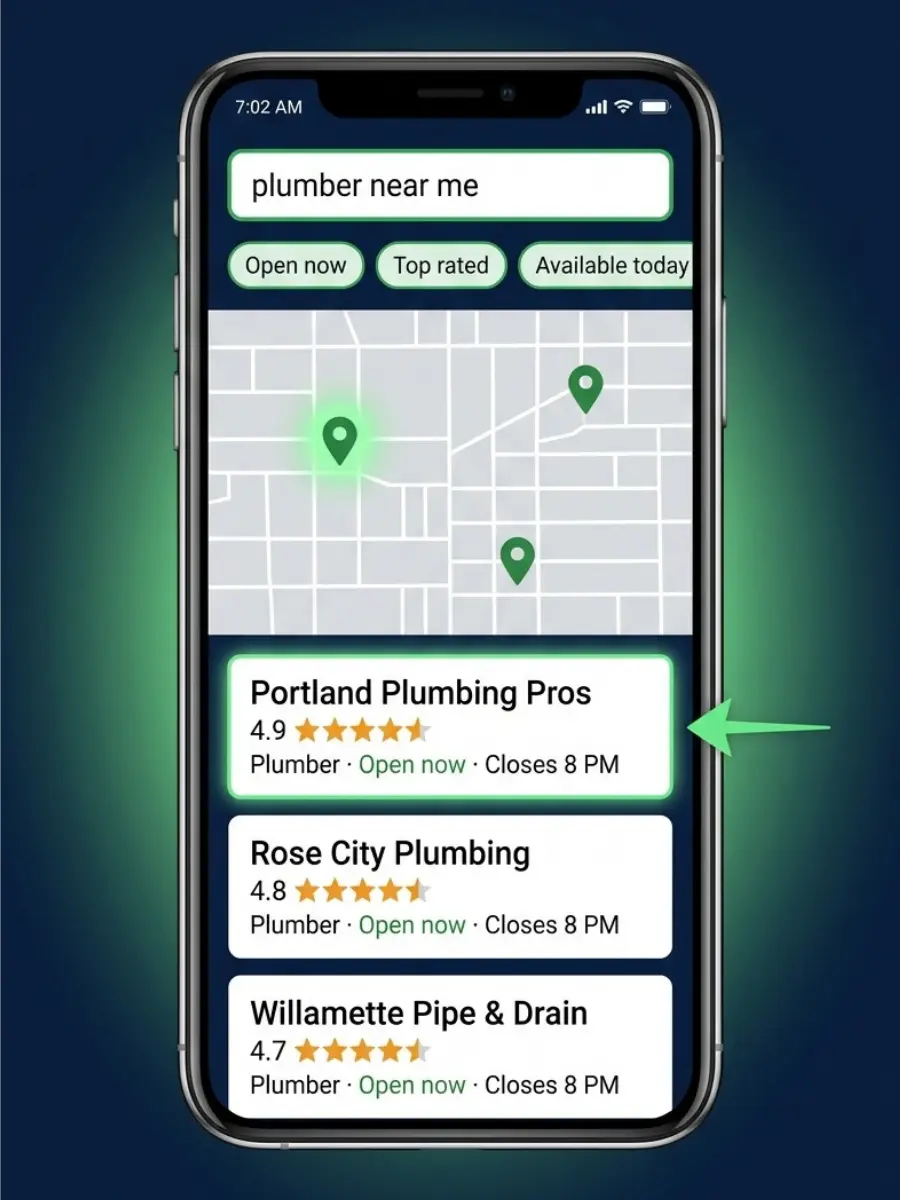
It’s 7 a.m. and a pipe has burst under a kitchen sink in Portland. The homeowner grabs a phone and searches ‘plumber near me.’ Google shows three businesses on a map, and they usually call the first one that looks trustworthy and close. They never scroll to the fourth. Local SEO is what puts your business among those three.
Is Local SEO Right for Your Business?
Local SEO works best for businesses with a few things in common. See how many of these sound like yours.
You Serve a Specific Area
Whether customers come to you or you travel to them, your business has a service area. Local SEO ties your visibility to that area, so you appear in front of people who can actually become customers, not searchers on the other side of the country.
Customers Reach You by Calling, Booking, or Visiting
When your revenue starts with a phone call, an appointment, or a walk-in, being found at the moment someone searches matters most. Local SEO targets those high-intent searches, where the person is ready to act.
Competitors Appear Above You on Google Maps
If rivals show up in the map results ahead of you, they’re capturing the customers searching nearby. That usually points to gaps in your Google Business Profile, your reviews, or your local signals, and those can be fixed.
When It May Not Be the Right Tool
If you sell only online to a national audience and have no local area to serve, another approach, such as national SEO or paid advertising, is likely a better fit. We’ll tell you that plainly instead of selling you something you don’t need.
Knowing whether local SEO fits is the first step. Understanding how Google ranks local businesses is the second, and it’s what we’ll cover next.
Three Signals, Two Places to Win: How Google Ranks Local Businesses
Every local search runs through the same quiet checklist before Google shows a single result. Knowing what it checks, and where those results appear, is the foundation of Portland search engine optimization that actually brings in calls.
The Signals Behind Every Ranking
Relevance
How well your business matches what the person is searching for. Complete profile details, accurate categories, and clear service pages tell Google you’re the right fit.
Distance
How close your location or service area is to the person searching. You can’t move your address, but accurate location details and a clearly defined service area tell Google which searches you can serve.
Prominence
How well-known, trusted, and authoritative your business is online. Reviews, mentions across the web, and links from other websites all build it, and it’s the signal you can grow the most.
Where Your Business Can Show Up
Google splits a local search page into two sections. Each one rewards different work and brings in customers in its own way.
The Local Pack (Map Pack)
A map at the top of the page showing the three best local matches, with ratings, addresses, and phone numbers. Your Google Business Profile drives this section, and many people call straight from it.
Organic Search Results (Website Listings)
The standard blue-link results below the map, leading to pages built for a local area. Your website drives this section, and it’s where internet marketing in Portland, Oregon reaches people who are still comparing options.
What We Do to Get Your Business Found, Chosen, and Called
Local SEO marketing in Portland isn’t one trick. It’s a handful of connected jobs, from your Google Business Profile to the links that point at your site, and each one makes the others work harder. Here’s what we handle.
Google Business Profile Optimization
We claim, verify, and fully build out your profile: the right categories, services, hours, photos, and service area. It’s the foundation of your map results, and often the first place customers decide whether to call.
Local Keyword Targeting
Good search engine marketing in Portland starts with knowing what nearby customers actually type. We find those searches and place them on the right pages, so Google knows what you offer and where.
On-Page Optimization and Local Content
We shape your titles, headings, and service pages, and write content for the areas you serve. The result is a fast, mobile-friendly site that matches local searches and turns visitors into calls.
AI SEO for Local Search
People now ask ChatGPT and Google’s AI answers who to call. We shape your profile, pages, and mentions so these tools can find and understand your business, and are more likely to mention it.
Customer Reviews and Reputation
We help you earn a steady flow of genuine reviews and reply to every one professionally. Recent, honest feedback builds trust with Google and with the customer deciding who to call.
Local Link Building
We keep your name, address, and phone number consistent across directories, then earn links from trusted local websites. Together, they show Google your business is real, established, and part of the community.
How Your Local SEO Gets Done
Pay for Every Click, or Build Something That Lasts?
Paid ads and local SEO can both put your business in front of customers who are ready to call. They differ in what they cost, how fast they work, and what you’re left with when the budget stops. Here’s how they compare.
PPC (Google Ads)
Put your business in front of searchers right away with paid ads. PPC works well when you need calls quickly, such as for a launch, a seasonal push, or a short promotion.
- Appears at the top of results as soon as ads go live
- Needs constant budget and bid management
- You pay for every click, whether or not it becomes a call
- Calls stop when the budget does
- Costs can rise as more competitors bid on the same searches
- Paid clicks don’t improve your organic rankings
- Plenty of customers scroll past ads to the map and organic listings
Local SEO
Local SEO helps your business earn its place in Google Maps and search results, so you keep getting found even when you’re not paying for ads.
- Brings in visitors with no charge per click
- Builds visibility that compounds as your profile and site get stronger
- Strengthens your website’s authority and your local credibility
- Builds customer trust through rankings you’ve earned
- Can cost less per call over the long run
- Helps you show up in Google Search, Google Maps, and AI answers
- Best for steady, long-term calls
Proven SEO Results
Proof Beats Promises, Here’s What We Actually Delivered
See how we’ve helped real businesses dominate local search and turn that visibility into meaningful, measurable growth.
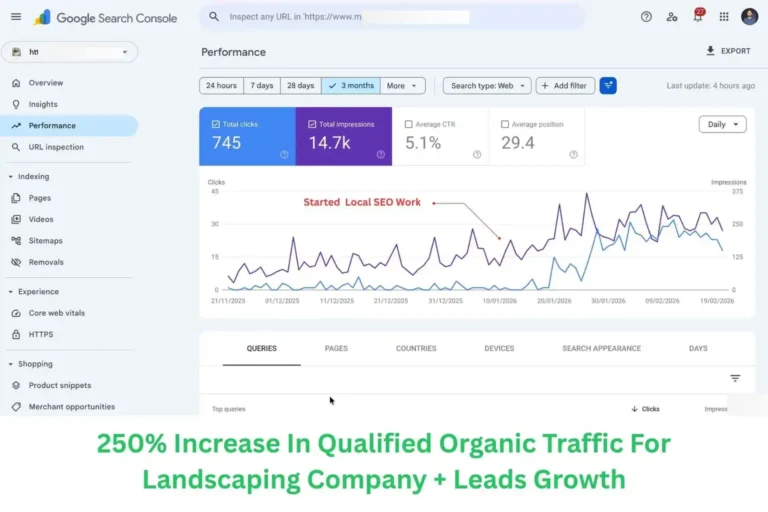
Landscaping Local SEO Case Study
Discover how our local SEO approach helped a landscaping company climb Google rankings, boost online visibility, and generate more qualified project inquiries.
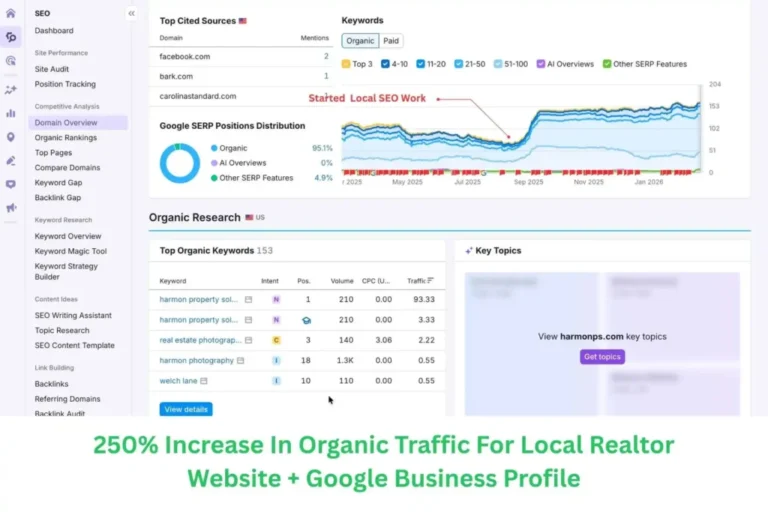
Realtor Local SEO Case Study
Explore how our local SEO strategy helped a residential realtor boost Google rankings, strengthen neighborhood visibility, and generate even more qualified buyer and seller inquiries.
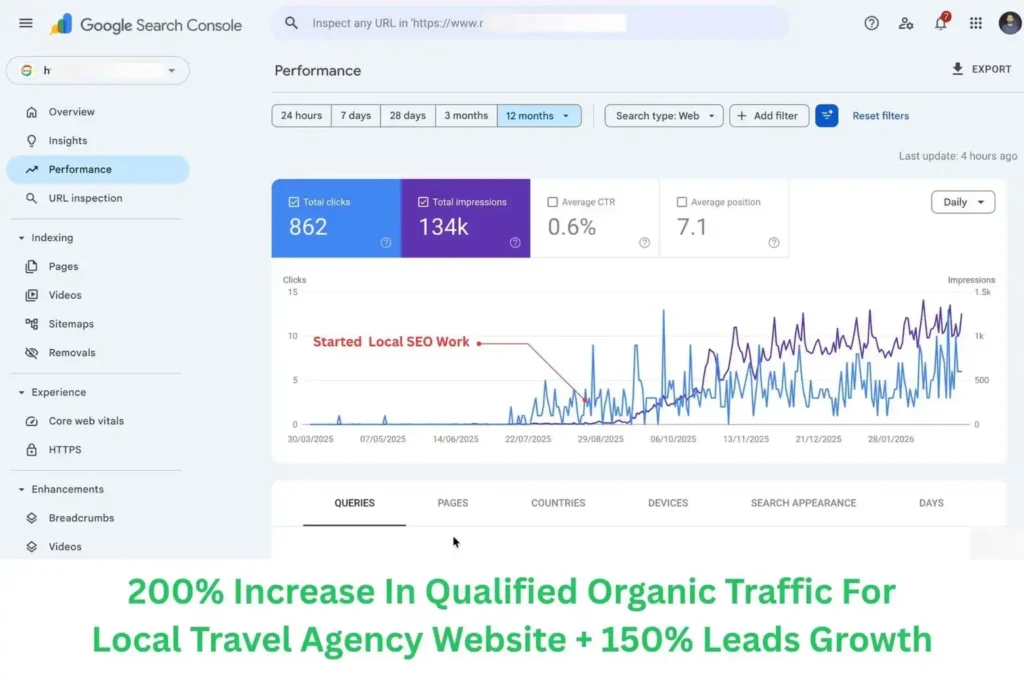
Travel Agency Local SEO Case Study
Learn how our local SEO strategy helped a travel agency improve Google rankings, increase online visibility, and attract more qualified booking inquiries.


Frequently Asked Questions
Straight answers to what Portland business owners ask before hiring a local SEO company, including cost, timing, and what to expect.
Ready to Work With a Portland Local SEO Company That Shows Its Work?
Request a free audit, and we’ll show you where your Google profile, website, and reviews stand today, and what we’d fix first.